
ATL
Final Floors Atlanta — publisher of The Atlanta Floor Journal
Metro Atlanta
The Atlanta Floor Journal
Installation lab

The surface gets the attention. The installation system determines how it behaves.

Use this library to understand how products attach to the building, what substrate conditions matter, and which questions should be answered before installation begins.

Flooring installation craftsmanship and substrate preparation
01
Method

Floating / Click-Lock

Best for: Many LVP, laminate and selected engineered-wood systems when the manufacturer approves a floating installation.

Planks connect to one another rather than being mechanically fastened or fully bonded to the substrate. Subfloor flatness, expansion details, transitions and underlayment remain critical.

Key checks

  • Manufacturer-approved substrate
  • Flatness tolerance
  • Expansion/perimeter details
  • Underlayment compatibility
  • Transition and run-length limits
02
Method

Glue-Down LVP / LVT

Best for: Many commercial resilient floors and selected residential systems where direct bonding is specified.

The flooring is bonded to a properly prepared substrate using an approved adhesive. Surface condition, flatness, moisture limits, adhesive selection and rolling procedures are central to performance.

Key checks

  • Adhesive compatibility
  • Moisture test requirements
  • Surface porosity/contamination
  • Patch/primer compatibility
  • Open time and rolling instructions
03
Method

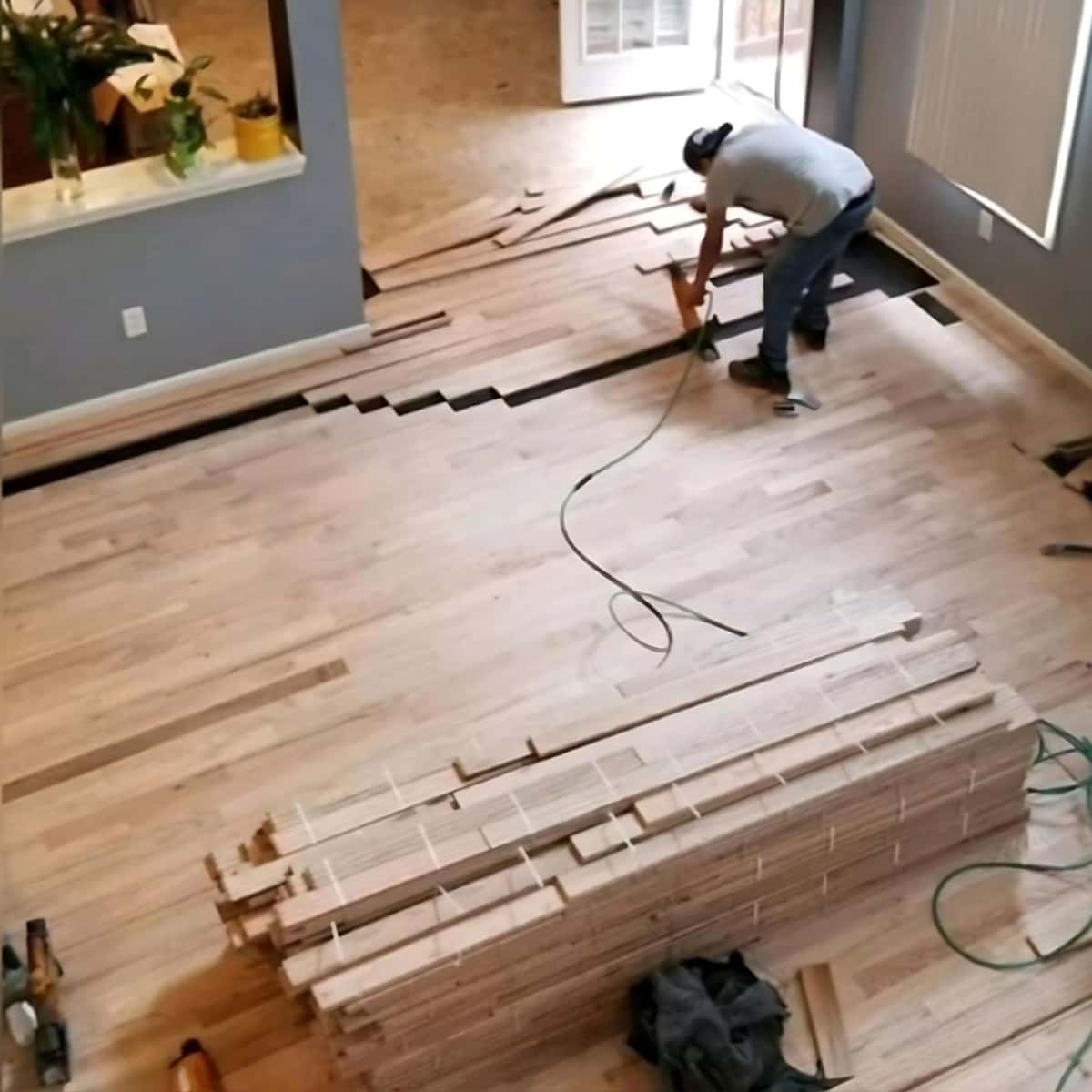
Nail / Staple Hardwood

Best for: Many solid and engineered hardwood products installed over approved wood subfloors.

Boards are mechanically fastened through the tongue or approved fastening zone. Product width, subfloor, moisture conditions, fastener schedule and expansion details affect the installation plan.

Key checks

  • Wood subfloor suitability
  • Fastener type and schedule
  • Moisture/acclimation requirements
  • Plank width
  • Expansion and layout
04
Method

Glue-Down Hardwood

Best for: Engineered hardwood and other manufacturer-approved wood floors over concrete or wood substrates.

Wood flooring is bonded to the substrate with a compatible adhesive. Moisture control, slab preparation, trowel specification and working time must follow the selected system.

Key checks

  • Manufacturer-approved adhesive
  • Concrete moisture requirements
  • Surface preparation
  • Trowel notch
  • Working/open time
05
Method

Glue-Assist Hardwood

Best for: Certain wider plank nail-down hardwood installations when the product/manufacturer or accepted installation specification calls for supplemental adhesive.

A mechanical fastening system is supplemented with compatible adhesive. It is not a universal requirement for every hardwood floor; the exact product and installation specification determine when and how it is used.

Key checks

  • Product/manufacturer approval
  • Adhesive compatibility
  • Fastener schedule
  • Subfloor condition
  • Plank width and layout
06
Method

Broadloom Stretch-In Carpet

Best for: Many residential rooms and commercial spaces designed for carpet over cushion.

Broadloom is installed over approved cushion and tack strip, with seams and stretch planned around room geometry, doorways and traffic.

Key checks

  • Cushion specification
  • Seam layout
  • Power stretching
  • Pattern repeat when applicable
  • Transitions and stairs
07
Method

Commercial Carpet Tile

Best for: Offices, corridors, classrooms and other spaces where modular replacement and phased work can be valuable.

Modular carpet is installed using a backing- and manufacturer-specific adhesive or attachment system. Layout pattern, substrate preparation and attic-stock planning affect long-term serviceability.

Key checks

  • Backing system
  • Approved adhesive/tackifier
  • Layout pattern
  • Substrate flatness and moisture
  • Attic stock
08
Method

Hardwood Sand & Finish

Best for: Existing site-finished hardwood that has sufficient material and condition for refinishing.

A refinishing system mechanically sands the wood, addresses repairs as appropriate, and applies a compatible stain/sealer/finish system. Existing floor construction and prior sanding determine feasibility.

Key checks

  • Remaining wood above tongue
  • Board repairs
  • Stain/finish compatibility
  • Dust-control plan
  • Manufacturer recoat/cure instructions