



Why WPC and Hybrid Rigid-Core Flooring Are Leading Metro Atlanta Flooring Trends in 2026
Save it, repair it, refinish it—or plan to replace it?
Send the floor type, the problem and up to four photos. Get a preliminary next-step path, then hand the project to Final Floors for a real on-site evaluation and estimate.

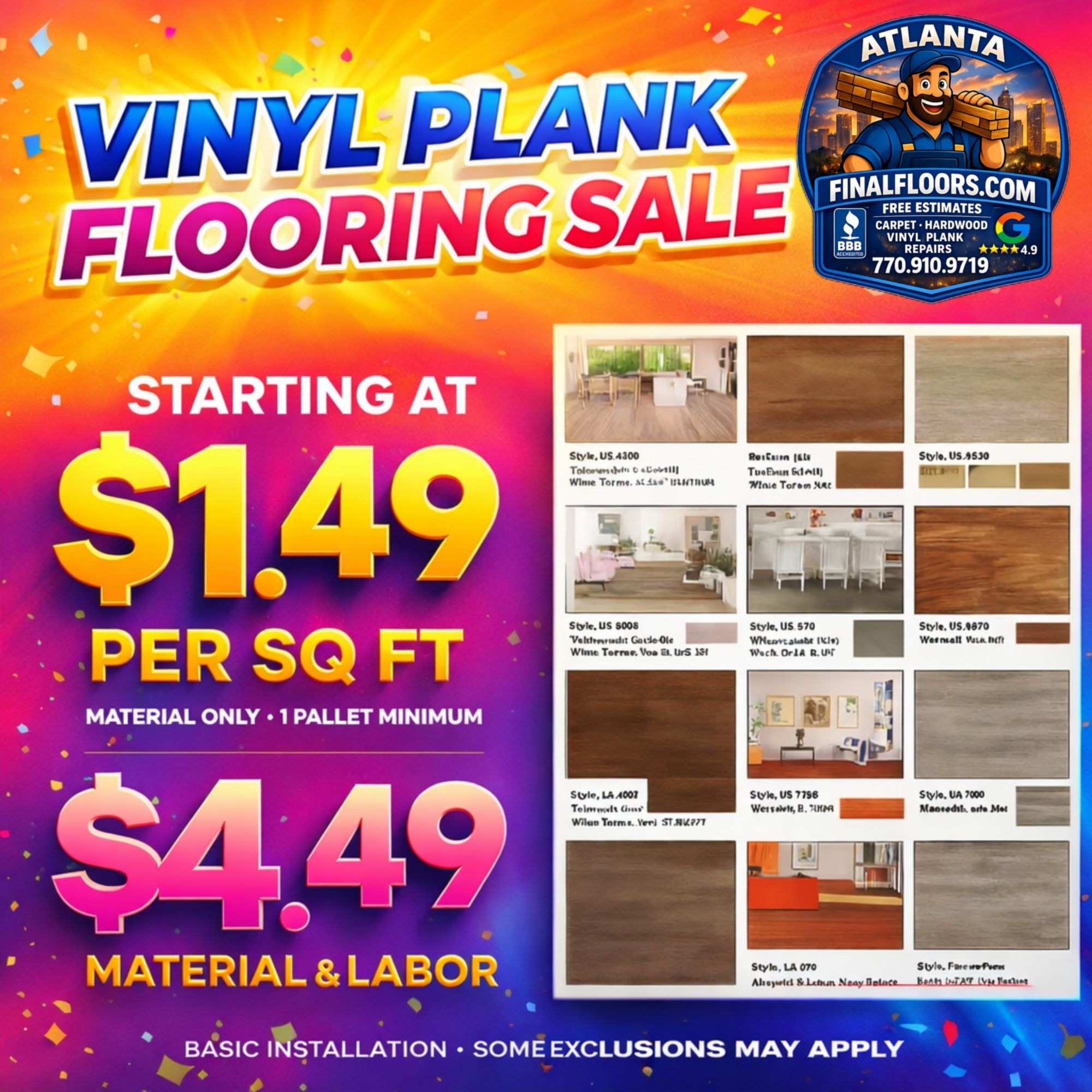
Across Metro Atlanta, flooring preferences are shifting in a practical direction. In 2026, many homeowners, investors, and property managers in areas such as Roswell, Alpharetta, Marietta, and Sandy Springs are moving toward WPC and hybrid rigid-core flooring because these products better match how real homes are used. They are designed to balance comfort, visual realism, and day-to-day durability without the maintenance demands of some traditional flooring materials.
For busy households, rental properties, and fast-turn renovation projects, this category offers a strong mix of performance and style. It is especially appealing for kitchens, main living areas, basements, and post-water-damage rebuilds where moisture resistance matters. As a Metro Atlanta flooring contractor, Final Floors, LLC is seeing increased demand for these systems from clients who want attractive, waterproof-friendly flooring installed quickly and correctly by in-house crews.
2. Comfort and Acoustics Are Becoming Top Priorities
One of the biggest reasons WPC flooring is winning in residential spaces is comfort. Thicker constructions, often in the 8mm to 14mm range, create a softer and quieter feel underfoot than many older rigid-core products. In homes with children, pets, or multiple levels, that added comfort can make a noticeable difference in everyday living.
Many of today’s better systems also include attached pads, which help reduce sound transfer and improve walking comfort. This matters in single-family homes, but it is especially important in condos, townhomes, and upper-floor living spaces throughout North Metro Atlanta. In communities with HOA requirements, it is smart to confirm IIC and STC sound ratings before installation. Choosing the right underlayment and installation system can help avoid problems later and protect resale value.
For primary bedrooms, family rooms, and other comfort-first areas, WPC is often the better option because it softens footfall noise and creates a warmer feel than harder, denser products.
3. Realism Has Improved Dramatically
The look of luxury vinyl plank flooring has improved significantly. Many 2026 products now feature embossed-in-register textures that align the surface grain with the printed design layer, creating a far more realistic wood appearance. Ultra-matte finishes also help these floors look less artificial and more like natural hardwood.
Buyers are also seeing more variety in plank sizing. Longer plank lengths, commonly 60 to 72 inches, and widths ranging from classic 5-inch profiles to wider 9-inch-plus options allow for more custom visual effects. In homes across Buckhead, Brookhaven, Johns Creek, and East Cobb, these larger-format planks are often selected to create an upscale, open look that supports modern resale expectations.
Bevel design has also advanced. Pressed, eased, and micro bevels can better mimic hardwood while trapping less dirt than older edge profiles. Stone-look flooring has evolved as well, with integrated grout bevels that create a more tile-like visual without many of the maintenance issues of traditional grout.
For clients focused on appearance, low-gloss finishes are especially worth considering. They help hide minor scuffs, reduce glare, and give floors a cleaner, more current look.
4. Durability Now Better Matches Real-World Atlanta Use
Durability is another major reason WPC and hybrid rigid-core floors are gaining traction. Today, wear layers in the 20 mil to 28 mil range are common in better-performing products, making them a smart choice for active households, rentals, and commercial settings. In practical terms, that means improved resistance to daily traffic, pet activity, and furniture movement.
Stronger locking systems are another important upgrade. Installation integrity matters, especially in homes where uneven subfloors, moisture conditions, or temperature swings may affect long-term performance. Products with better locking profiles can reduce movement issues and help maintain a cleaner finished appearance.
Some denser hybrid rigid-core systems are also designed for broader temperature tolerance. That makes them particularly useful in sunrooms, enclosed porches, and other areas that experience more thermal fluctuation. In parts of Metro Atlanta where homes may have bright sun exposure or variable conditions, selecting the right core construction is essential.
For high-traffic environments such as rental homes in Decatur, Smyrna, or Midtown Atlanta, a 22 mil to 28 mil wear layer is often the better long-term value.
5. Installation Flexibility Is Expanding
Another reason these floors are becoming more popular is that installation options are improving. Matching trims and stair nosings are now easier to source, making it simpler to create a finished, cohesive look throughout the home. That is important for staircase upgrades, transitions between rooms, and multi-level renovations.
Loose-lay formats are also becoming more relevant for rental turns and investment properties that need fast updates. In addition, wall-rated rigid flooring products are opening new design opportunities for accent walls, commercial feature areas, and creative residential applications.
Waterproof textile-hybrid products are also entering the market for spaces like mudrooms and basements where comfort and moisture resistance both matter. These options can be useful in homes recovering from water events or in lower-level spaces built over concrete.
Confirm the schedule after measurements, material availability, subfloor and moisture checks, product requirements, and building access are reviewed. For rentals or occupied businesses, agree on phasing and re-entry before setting a move-in or reopening date.
6. Sustainability Is Becoming Part of the Buying Decision
In 2026, sustainability is no longer a niche concern. More flooring manufacturers are introducing products with recycled content and participating in take-back or second-life initiatives. While performance and appearance still drive most purchase decisions, environmentally aware buyers increasingly want products that reflect more responsible manufacturing practices.
For Metro Atlanta property owners, this trend is most useful when paired with practical selection criteria. A floor should not only support sustainability goals, but also perform well in the actual space where it is being installed. A product that lasts longer, resists replacement, and fits the conditions of the property can provide both environmental and financial benefits over time.
7. How to Choose the Right Product for Your Atlanta Property
The best flooring choice depends on the room, traffic level, and exposure conditions.
For main living areas and bedrooms, WPC is often the preferred solution because of its comfort and better sound absorption. For sunrooms, garages, or spaces with wider temperature swings, a denser rigid or hybrid core is usually more appropriate.
For homes with pets, active families, rental use, or heavy foot traffic, it is wise to select products with 22 mil to 28 mil wear layers. In basements or homes affected by past moisture issues, rigid-core flooring over concrete can perform very well when proper moisture testing, moisture barriers, and subfloor leveling are part of the installation process.
For condos and HOA-regulated properties, always confirm sound requirements before product selection. Underlayment compatibility and sound ratings can affect both compliance and long-term satisfaction.
From a design perspective, low-gloss finishes are excellent for hiding everyday wear. Embossed-in-register textures add realism, while longer and wider planks can strengthen the visual appeal of a property for future resale.
8. Why Professional Installation Still Matters
Even the best flooring product can underperform if the installation is rushed or the subfloor is not properly prepared. Moisture testing, subfloor leveling, sound control planning, and transition detailing all matter. This is especially true in Metro Atlanta homes where slab conditions, humidity, and prior water exposure can influence results.
Verify current business profiles, recent project references, the written scope and the selected product requirements.
For homeowners, realtors, and property managers considering luxury vinyl plank flooring installation in Atlanta, the 2026 trend is clear: WPC and hybrid rigid-core floors are delivering the combination of comfort, realism, and durability that modern properties demand. With free in-home estimates, showroom samples brought directly to you, and fast scheduling, it is easier than ever to choose flooring confidently and keep your project moving.
Save it, repair it, refinish it—or plan to replace it?
Send the floor type, the problem and up to four photos. Get a preliminary next-step path, then hand the project to Final Floors for a real on-site evaluation and estimate.
Technical reference starting points
Use these industry resources for deeper technical context. For tolerances, adhesives, underlayments, care and warranty conditions, the current instructions for the exact product and system being installed remain the controlling source.
Save it, repair it, refinish it—or plan to replace it?
Send the floor type, the problem and up to four photos. Get a preliminary next-step path, then hand the project to Final Floors for a real on-site evaluation and estimate.
Ready to turn the research into a project scope?
Continue this research on the primary Final Floors service site for project-specific scope and estimating.
Need this done in your Atlanta home?
Final Floors LLC — Metro Atlanta flooring since 2016. Verify current reviews and business-profile details through the live third-party profiles.
