



Why LVP Floors Buckle Months After Installation—and How to Prevent It in Metro Atlanta
Save it, repair it, refinish it—or plan to replace it?
Send the floor type, the problem and up to four photos. Get a preliminary next-step path, then hand the project to Final Floors for a real on-site evaluation and estimate.

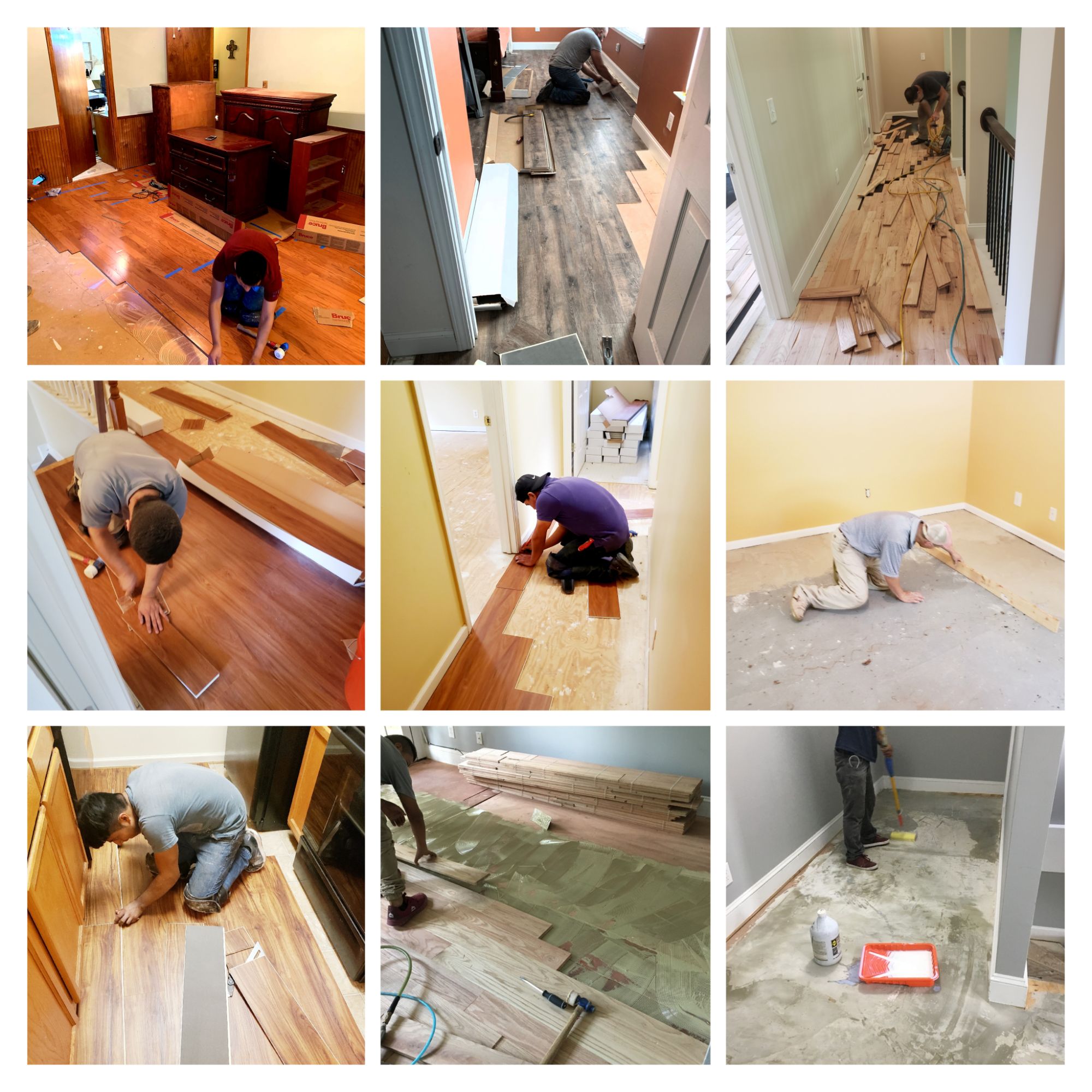


Luxury vinyl plank (LVP) is a smart choice for Metro Atlanta homes because it is durable, water resistant, and fast to install—ideal for kitchens, basements, rentals, and busy households in Roswell, Alpharetta, Marietta, Sandy Springs, and surrounding areas. However, LVP is often treated as an “easy install,” which leads to failures that show up later: gapping, peaking, noisy joints, and buckling. These issues almost always trace back to three preventable mistakes: poor subfloor preparation, inadequate acclimation and jobsite conditioning, and incorrect expansion and movement planning. Addressing these areas up front results in a floor that remains flat, quiet, and beautiful for years.
Mistake 1: Skipping Proper Subfloor Preparation
Rigid-core LVP (SPC/WPC) needs a flat, stable substrate. Most manufacturers specify no more than 3/16 inch variation over a 10-foot span. When this is ignored, the floor can flex and the stress concentrates at the click-lock joints, leading to gapping or “telegraphing” of dips and seams.
What professional preparation includes:
- Flatness evaluation: Map highs and lows using a long straightedge or laser. Grind down humps (often at slab joints or high seams in wood subfloors) and fill low areas with premium self-leveling underlayment. Feathering edges prevents ridges that telegraph through.
- Structural stability: Secure loose OSB/plywood panels, re-fasten popped nails with screws, and address deflection between joists. Squeaks are corrected before flooring goes in.
- Moisture testing: On concrete slabs (common in Alpharetta and Sandy Springs), check moisture with ASTM-compliant tests (in-slab RH per F2170 or MVER per F1869) and a quality surface meter. In basements and on-grade slabs, a vapor barrier or specific underlayment may be required to protect the floor and the warranty.
- Transition and trim planning: Determine heights at doorways, stair noses, and adjacent surfaces (tile, hardwood, carpet) so reducers and T-molds sit flush. Confirm door and closet clearances after leveling and underlayment are accounted for.
- Clean, dust-controlled surface: Vacuum and tack to remove grit that can prevent full plank support or create click-lock separation over time.
Skipping any of these steps pushes problems into the future—and into your warranty claim file. Proper prep protects both the product and your investment.
Mistake 2: Inadequate Acclimation and Jobsite Conditioning
Even rigid-core LVP reacts to temperature and humidity swings. Installing in a house that is not at normal living conditions (with stable HVAC) can create immediate stress on the locking system. As the environment stabilizes later, the floor may peak, gap, or develop noisy joints.
Best practices:
- Condition the home: Run HVAC to target normal living conditions before, during, and after installation. Manufacturer guidance varies, but a stable temperature and relative humidity within the product’s specified range is essential.
- Stage materials properly: Some LVPs require acclimation; others require conditioning in cartons for a prescribed time. Follow the manufacturer’s instructions exactly. Store cartons flat, off concrete, away from direct sunlight, and in the installation rooms.
- Control humidity: Atlanta summers bring high humidity that basements and slab-on-grade spaces absorb. Dehumidification may be needed, especially in Roswell and Marietta basements. Maintain consistent RH per product specs to prevent seasonal movement issues.
- Scheduling: Confirm the schedule after measurements, material availability, subfloor and moisture checks, product requirements, and building access are reviewed. For rentals or occupied businesses, agree on phasing and re-entry before setting a move-in or reopening date.
Correct conditioning protects the click-lock integrity and ensures the floor “lives” comfortably in your home environment.
Mistake 3: Incorrect Expansion Gaps and Movement Planning
Floating LVP needs room to expand and contract. If it is “pinned” at the edges or under fixed objects, the movement has nowhere to go—leading to buckling and tenting.
Key movement rules:
- Perimeter expansion space: Maintain manufacturer-required gaps at all walls, cabinets, pipes, and stair stringers (often around 1/4 inch, but verify your product). Use spacers consistently and never caulk or grout this gap closed.
- Undercut door jambs and casings: Rather than notching planks, undercut jambs/casings so the floor can slide underneath while maintaining expansion space.
- Break up long runs: Large, continuous areas may require movement joints or T-molds between rooms and at thresholds. Plan locations for these trims so they look intentional.
- Do not trap the floor: Floating LVP should not be installed under fixed cabinets, islands with mechanical fastening, or walls. Set those after the floor only if permitted by the manufacturer and with movement allowances—or better, install floors up to the toe-kick with proper expansion space and use finished trim.
- Use correct trims: Transition strips, reducers, stair noses, and end caps must match height and allow movement. Improvised or fastened-through trims can restrict float.
Proper movement planning prevents seasonal stress and preserves the clean lines that make LVP so appealing.
Metro Atlanta Factors: Slab Moisture, Summer Humidity, and Basements
Our climate adds complexity:
- Slab moisture: On-grade slabs in Alpharetta, Sandy Springs, and newer parts of Cumming often read elevated moisture seasonally. Use ASTM-compliant testing, and install appropriate vapor barriers or manufacturer-approved underlayments for rigid-core products.
- Summer humidity: Prolonged high humidity can load moisture into subfloors and the building envelope, particularly in Marietta and Decatur basements. Dehumidifiers and continuous HVAC operation help maintain stable RH.
- Crawlspaces and older homes: In areas like Roswell and East Cobb, crawlspaces without proper vapor control can introduce moisture into wood subfloors. Encapsulation, venting improvements, or a robust underlayment system may be needed before LVP.
- Basements and water events: Rigid-core LVP with integrated closed-cell backing is often the best long-term choice for post-water-damage rebuilds. Combine with moisture mitigation and documented testing for insurance.
Confirm the schedule after measurements, material availability, subfloor and moisture checks, product requirements, and building access are reviewed. For rentals or occupied businesses, agree on phasing and re-entry before setting a move-in or reopening date.
Pre-Installation Checklist for Roswell, Alpharetta, Marietta, and Sandy Springs Homes
- HVAC operating and stable at normal living conditions for at least 48 hours prior to install (and maintained afterward).
- Moisture testing completed and documented for slabs and wood subfloors; mitigation plan in place if required.
- Subfloor flatness verified (within 3/16 inch over 10 feet) and repairs scheduled (grinding, self-leveler, re-fastening).
- Door clearances, stair edges, and transition heights confirmed; trims and stair noses selected.
- Expansion plan finalized: perimeter gaps, undercuts, long-run breaks, and trim types (T-molds, reducers).
- Materials staged properly on site per manufacturer (time, orientation, and room).
- Appliances, toilets, and furniture plan set (move/return timing) without pinning the floor.
- Baseboards/shoe molding plan determined (remove and reinstall vs. add new shoe).
- Dust containment and cleanup plan approved; trash haul-away arranged.
- Final walkthrough scheduled, with maintenance guidance and warranty paperwork ready.
Questions to Ask Your LVP Installer
- How will you document subfloor flatness and moisture readings before installation?
- What is your plan for grinding, leveling, and re-fastening? Is this itemized in the estimate?
- Which underlayment or vapor barrier is approved for my product and subfloor?
- How will you condition the jobsite and acclimate the materials?
- Where will movement joints or trims be located, and how will you handle door jambs and stair noses?
- Will you install under fixed cabinets or islands? If not, how will the final edges be finished?
- Who performs the work—in-house crews or subcontractors?
- What brand and wear layer are you proposing (e.g., 20 mil), and what is the finish warranty?
- How long will the project take, and how will you protect adjacent finishes?
- What maintenance guidelines and warranty registration will I receive at completion?
Set a project-specific schedule
Day 0 (pre-day):
- Free in-home consultation, product selection, and signed scope including leveling, trims, and moisture strategy.
- Materials ordered; HVAC set to normal living conditions.
Day 1:
- Protect work areas; remove existing flooring as needed.
- Subfloor inspection and documentation; grinding, re-fastening, and self-leveling applied.
- Moisture barrier/underlayment installed if required.
- Materials staged per manufacturer in installation rooms.
Day 2:
- Precise layout, undercuts at door jambs, and reference lines pulled.
- LVP installed with consistent expansion space; transitions and stair noses fit.
- Base/shoe installed; edges detailed without pinning the floor.
Day 3 (as needed):
- Final trims, touch-ups, and cleanup; appliances reset per plan (without pinning).
- Walkthrough, care instructions, and warranty documentation provided.
Many projects in Buckhead, Brookhaven, and Johns Creek complete in 1–2 days; larger multi-room or leveling-intensive projects may use the third day to ensure flatness and finish quality.
Why Metro Atlanta Homeowners and Pros Choose Final Floors, LLC
- in-house crews only: We never subcontract, ensuring consistent craftsmanship, clean prep, moisture protection, and warranty-ready installation.
- Business verification: Verify current business profiles, recent project references, the written scope and the selected product requirements.
- Scheduling: Confirm the schedule after measurements, material availability, subfloor and moisture checks, product requirements, and building access are reviewed. For rentals or occupied businesses, agree on phasing and re-entry before setting a move-in or reopening date.
- Moisture and movement experts: Documented testing, leveling plans, and correct expansion detailing prevent buckling and gaps.
- Top products and finishes: Shaw, Mohawk, COREtec, Bruce, Mannington, Armstrong; finishes from Bona, DuraSeal, Rubio Monocoat, and Minwax for companion hardwood refinishing.
- Full-service options: LVP, hardwood installation and refinishing, laminate, carpet, stair upgrades, subfloor leveling, sound underlayments, commercial after-hours installs, and flooring reconstruction after qualified mitigation.
- Metro coverage: Roswell, Alpharetta, Marietta, Sandy Springs, Johns Creek, Brookhaven, Buckhead, Smyrna, Vinings, Duluth, Suwanee, Kennesaw, Woodstock, Peachtree Corners, Decatur, Dunwoody, Milton, Cumming, East Cobb, Lawrenceville, Norcross, Midtown Atlanta, and nearby North Metro areas.
Current featured LVP deal: 7.56" x 48.62" planks, 5 mm total thickness plus 1 mm XPS backing, 20 mil wear layer, cut bevel, sold by the pallet (approx. 1,123 sq. ft.).
Ready to Prevent Buckling and Gaps? Schedule Your Free In‑Home Estimate
If you are upgrading a Sandy Springs kitchen, finishing a Roswell basement, turning a Marietta rental, or refreshing an Alpharetta listing, the right prep, conditioning, and expansion plan will keep your LVP flat and flawless. Final Floors, LLC brings the samples to you, documents moisture and flatness, and installs with in-house crews—fast.
- Call: 770-910-9719
- Text: 770-870-9876
- Email: finalfloors@gmail.com
- Website: https://www.finalfloors.com
- Hours: Mon–Fri 8am–7pm, Sat 10am–6pm, Sun 12pm–6pm
Inquire about seasonal LVP pricing and current incentives:
- Written pricing: Compare a current written proposal that separates material, removal, disposal, preparation, installation, transitions and cleanup. Identify exclusions and allowances, and agree on how any changes will be documented before work proceeds.
We make floors look good—and we make them stay that way.
Save it, repair it, refinish it—or plan to replace it?
Send the floor type, the problem and up to four photos. Get a preliminary next-step path, then hand the project to Final Floors for a real on-site evaluation and estimate.
Technical reference starting points
Use these industry resources for deeper technical context. For tolerances, adhesives, underlayments, care and warranty conditions, the current instructions for the exact product and system being installed remain the controlling source.
Save it, repair it, refinish it—or plan to replace it?
Send the floor type, the problem and up to four photos. Get a preliminary next-step path, then hand the project to Final Floors for a real on-site evaluation and estimate.
Ready to turn the research into a project scope?
Continue this research on the primary Final Floors service site for project-specific scope and estimating.
Need this done in your Atlanta home?
Final Floors LLC — Metro Atlanta flooring since 2016. Verify current reviews and business-profile details through the live third-party profiles.
